

THE NEW INDUSTRIAL MIND
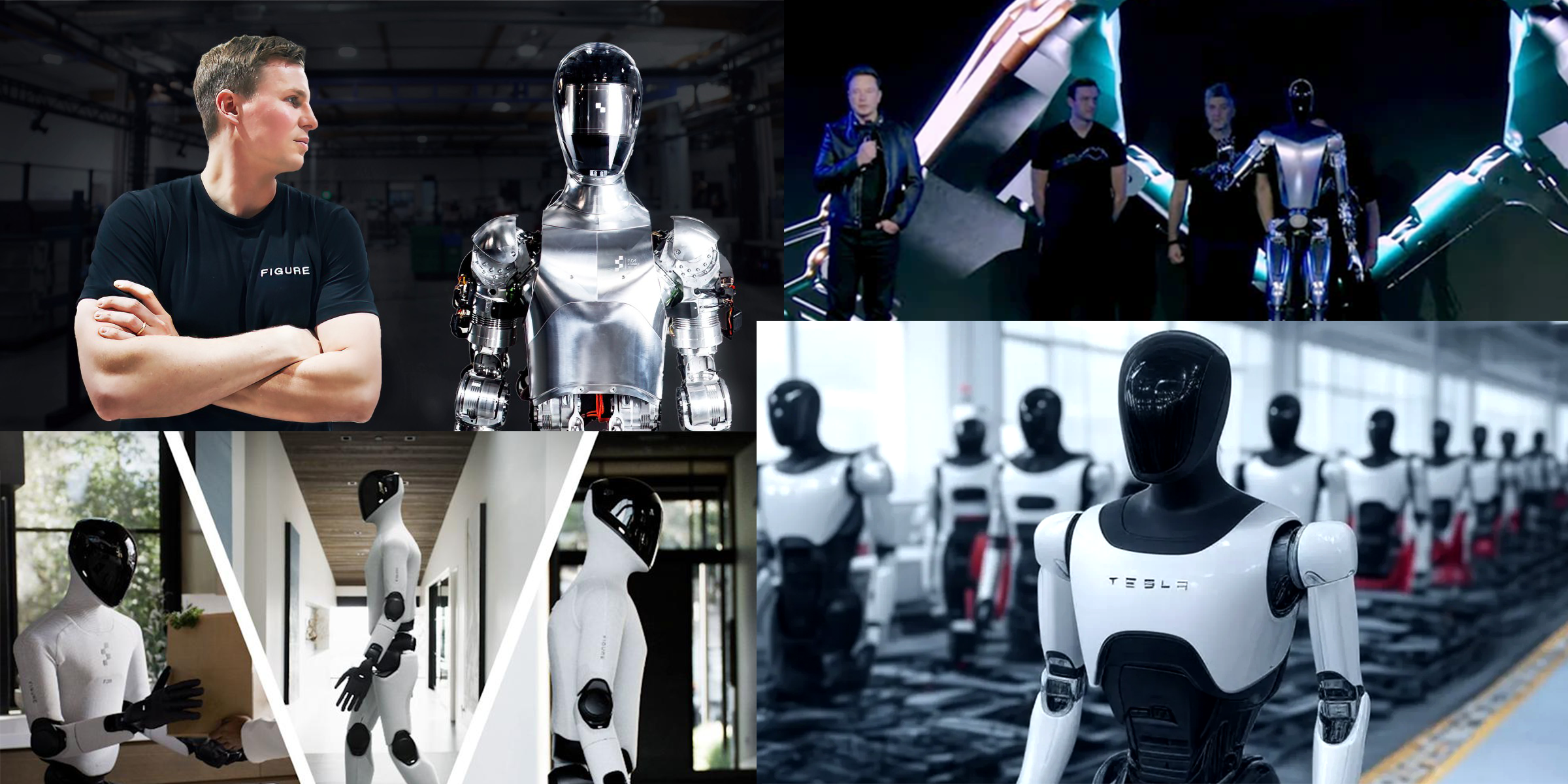
The rise of Silicon Valley Physical AI & Robotics

1. The Hardware Strikes Back
Silicon Valley is building hardware again, but not out of nostalgia. It’s a necessity driven by shifting economic cycles and new business models.
After two decades of dematerialization, digital technology can no longer stay confined in a remote box. AI needs to feel the field and learn in the real world.
What comes from silicon eventually returns to it.
The new Silicon Valley isn’t made only of connected screens, but of objects that operate — and think — on the edge.
If anyone truly believed Uber was “car-less,” that logic doesn’t apply to WAYMO.
Here in San Francisco, some are trying to rebrand it as Cerebral Valley.
To me it’s nonsense. I prefer to call it a return to reality: intelligence grounded in the physical world, with massive needs for metal, water, and energy.
A reality that struggles to find an economic model without controlling the hardware.
In this phase shift, hardware and software renegotiate their relationship.
AI is trying every possible way to escape the server farm — and there’s a harder truth behind this shift: as long as AI stays in the cloud, it has limited chances of ever becoming profitable at the scale needed to justify trillion-dollar investments.
To have a tangible economic future, AI must leave the data center, enter the physical world on the legs of robots of every kind — and get a real job.
If we can sell humanoid robots at the price of an autonomous Tesla, we can also imagine leasing them out.
A robot working 24/7 with a GPT or Grok brain can cost the equivalent of a car lease: $500 a month. Add $200 for the LLM and $200 for the vertical skill.
Total: under a thousand dollars.
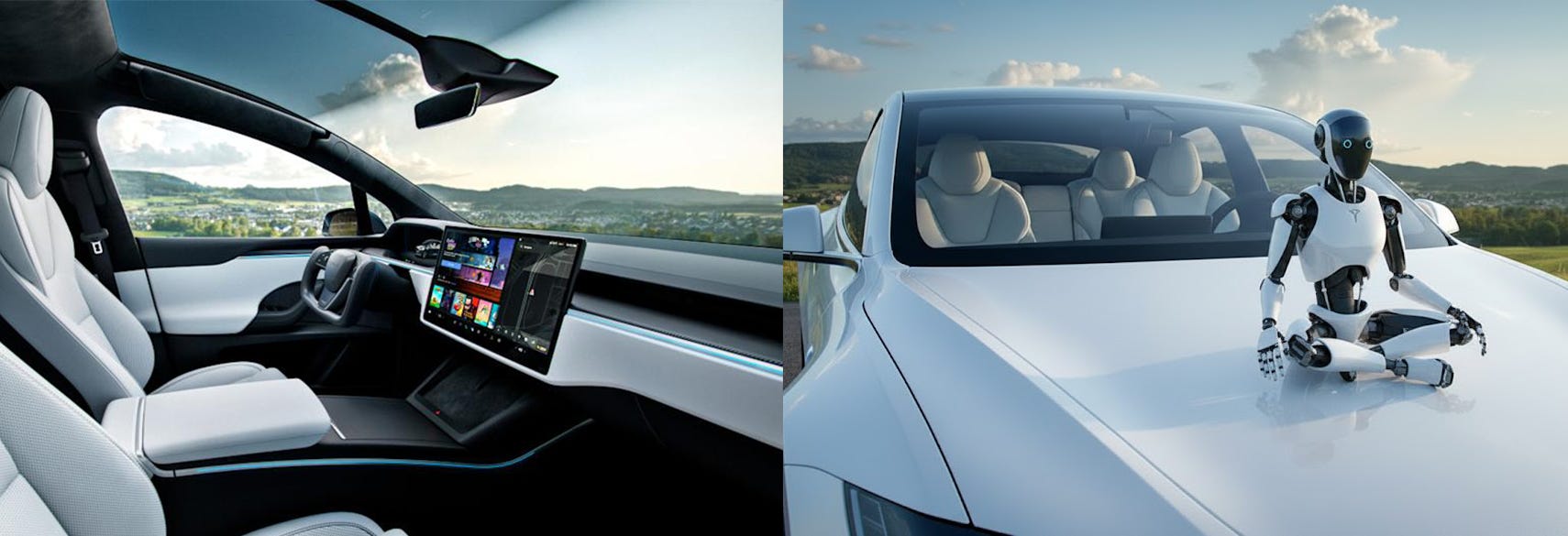
That’s less than the cost of a part-time shift at federal minimum wage — for a system that doesn’t sleep, doesn’t get sick, and works three shifts a day, seven days a week.
Or, if you prefer, less than one-tenth the price of a traditional industrial robotic cell, with additional cognitive flexibility.
This opens a social, economic, and political revolution.
And a simple calculation reveals a new truth: the balance between the cost of hardware and the cost of software.
⸻
2. The New Balance — When Hardware Becomes Cheap and Meaning Gets Expensive
For decades, the value of an object was measured by materials, production, and energy. Today the logic has flipped.
Software is now what truly consumes. AI costs more than steel.
While hardware prices fall due to scale, robotics, and tighter supply-chain control, the weight of code rises. It’s an asymmetric curve: matter devalues, mind capitalizes.
The “low-cost hardware, high-margin software” model isn’t new — Xerox and HP sold printers nearly at a loss and earned money on toner.
But that was subsidy economics: hardware as bait.
This is different.
Hardware is the body of intelligence — the collector of new data, the incremental source of field knowledge.
Software is no longer the consumable. It’s the rented mind.
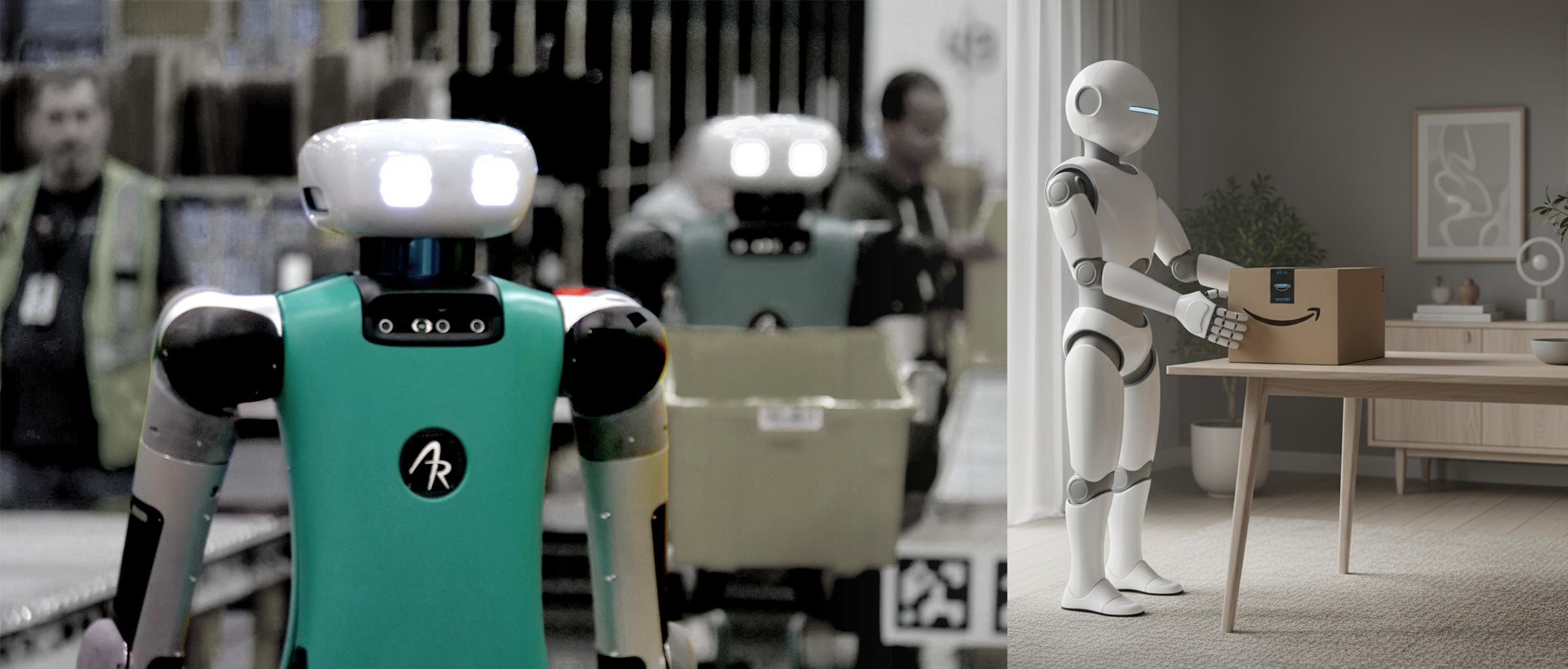
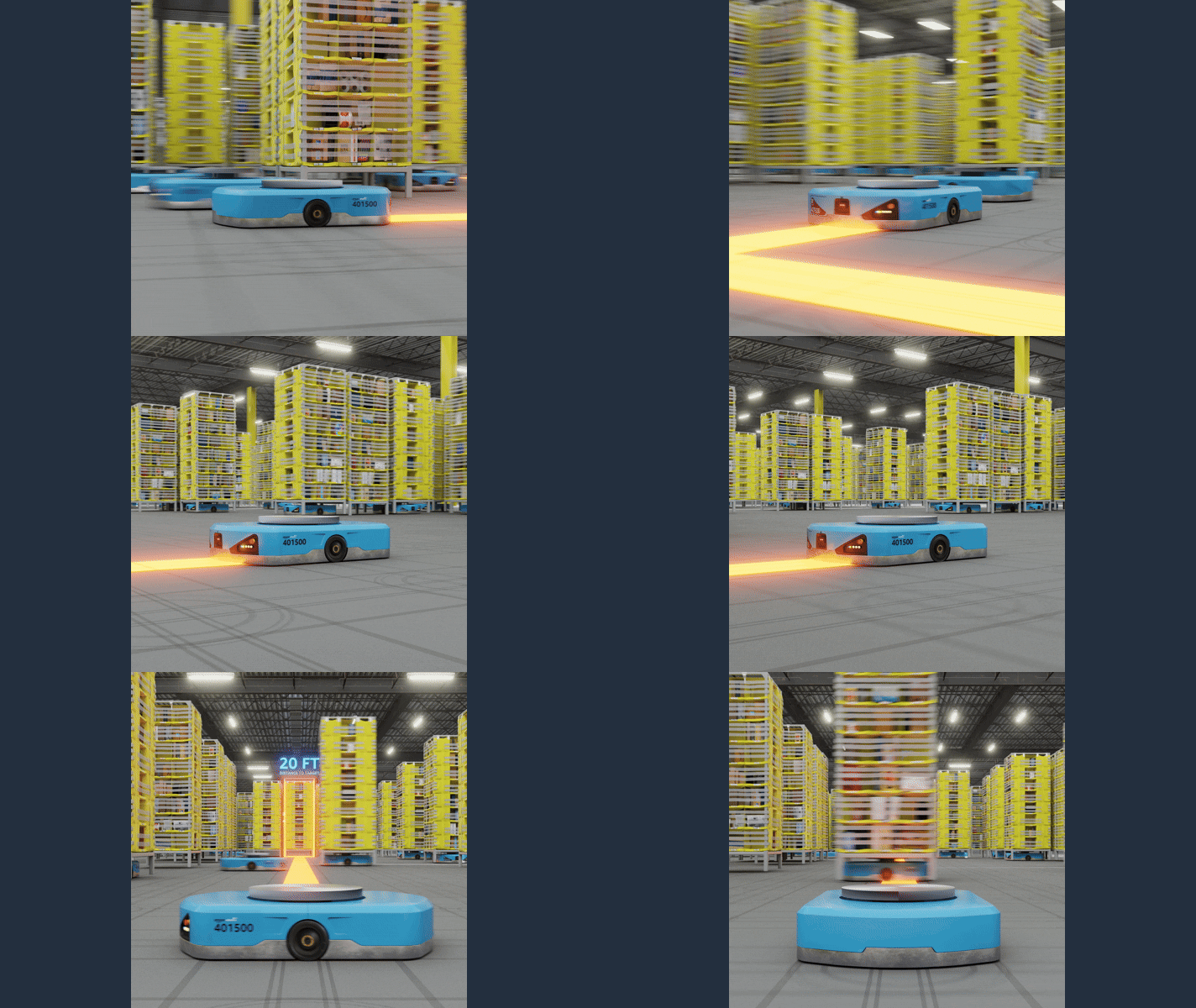
A robot is not a printer selling you ink cartridges. It’s a cognitive system renting movement, physical action, and decisions — and unlike a printer, it can do a thousand things or simply sell you everything. And Amazon has already shown the way: its warehouses now run on more than one million robots, in dozens of shapes and roles, working full-time.
The robot Amazon Prime will place in your living room for a few dollars a month will know your habits better than anyone else — and it will get you to buy anything, effortlessly.
In old software, the marginal cost of a copy was zero.
Every Windows or SAP license was pure margin.
In today’s non-edge AI, the producer carries real operational costs: servers, GPUs, bandwidth, energy. Every inference costs money. Every active user weighs on the bottom line.
Hardware therefore becomes the necessary condition for software to be present in the physical world, learn from it, and perform work with positive unit economics.
This is not a temporary distortion. It’s the new cost structure of the post-AI industry: competition happens on the cognitive density of what you build.
⸻
3. From Code to Behavior (the world was never flat)
There was a moment when software looked in the mirror and understood it no longer needed to be seen. I’ve been a fan of skeuomorphism and magical objects. Yet for two decades I designed flat interfaces: everything on a screen, two dimensions, mediated by glass. It made sense: disembodied software living in servers and manifesting as pixels.
Flat design was the perfect metaphor for a bodiless intelligence — a wired thought: action → reaction.
Reaction, exactly. A system shifting from passive to reactive, still far from the proactivity of a companion, copilot, or agent. When AI enabled software to leave the screen and enter the physical world, that grammar dissolved.
After decades of layers and buttons, AI removes the fixed sequence and opens the door to infinite interactions: a behavior.
Software stops being linear flow and becomes reactive matter.
Every input becomes negotiation.
Every output becomes possibility.
Liquidity is not an aesthetic effect: it’s a new machine state.
It’s what happens when a system is no longer hard-wired; when every gesture triggers an unexpected response; when the interface dissolves and rebuilds itself instantly.

Like in The Abyss: the water messenger imitating the protagonist’s face. Not just cinema — the first portrait of a boundaryless consciousness.
Today software is becoming exactly that: a cognitive fluid adapting to whoever uses it and influences it.
Apple has reopened that door.
From there, a water messenger or a liquid-metal terminator could come out.
In static UIs, interaction was a discrete act: click, command, result.
In liquid UIs, it’s a continuum: flow, reaction, learning.
There is no longer a clear separation between who acts and who responds.
Every interaction updates the model. Every system decision updates us.
In short: flat is dead.
An intelligence that inhabits a physical body cannot stay flat.
⸻
4. Conclusions — The New Industrial Mind
The rise of AI brings robotics into everyday life.
Even without AGI, 2030 will mark a turning point: with 8.5 billion people and a global GDP above $120 trillion, we are entering a new cycle.
The New Industrial Mind: a production ecosystem where robotic density doubles every five years, and physical-digital automation contributes 15–18% of global wealth. Wealth could rise sharply even on a per-capita basis.
It could — but that depends on us.
Star Trek or Elysium aren’t genres — they’re actual bifurcations.

As much as I love Silicon Valley, talking with Westerners who moved to China shows me more clues of possible futures.
Here in California, we are building technologies that widen the gap between those collaborating with the new industrial mind and those left outside.
Our culture carries individualism and elitism; other places, denser and more homogeneous, can’t afford that. The challenge is to balance everything: technological acceleration, global tensions, social stability.
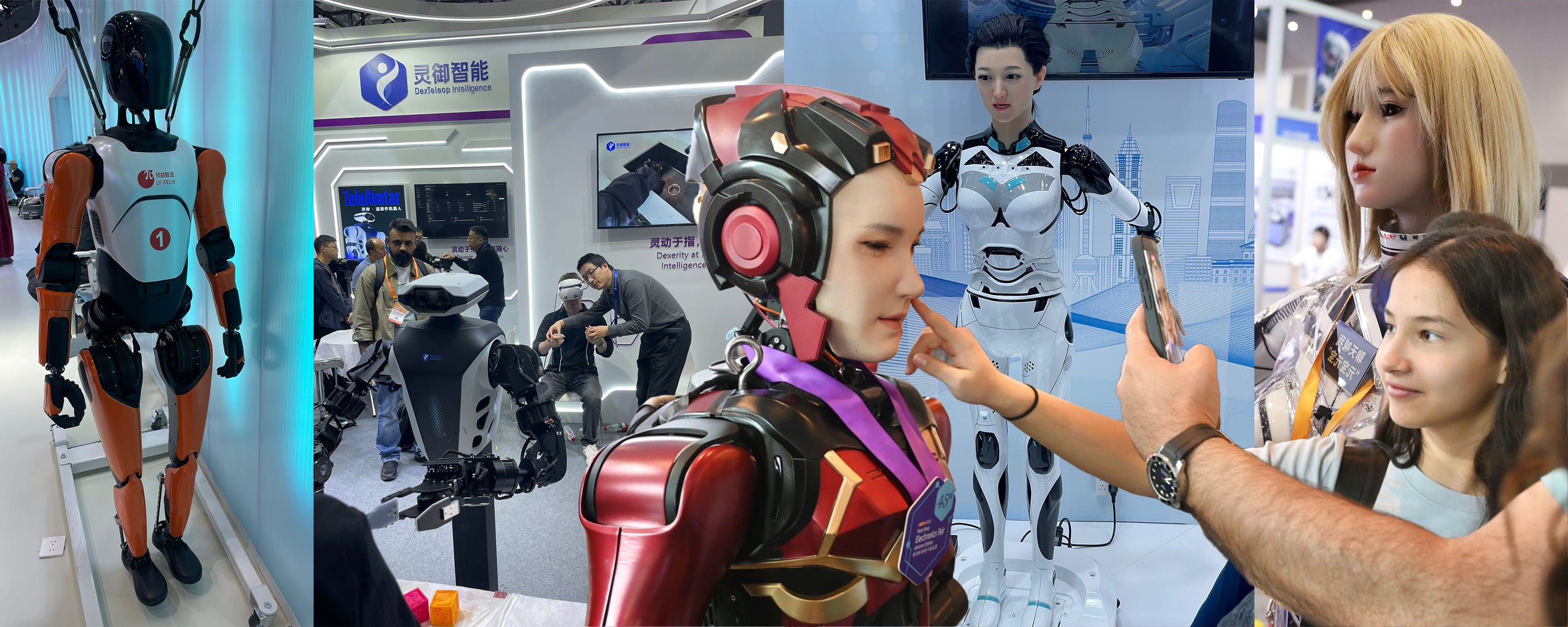
The Shenzhen model works because it integrates state-driven research, distributed manufacturing, subsidies, and a strong focus on the domestic market.
A localized Silicon Valley could do something similar:
• Research funded through dual-use programs, DoE, NIH, SBIR
• Growth incubated by YC-type structures and venture studios
• Industrial reshoring with co-investment from allied countries
• Initial focus on the U.S. market
• Robo-tax or surplus-redistribution models, radically extending the Alaska Permanent Fund approach
Intelligence goes where it finds matter to transform, and we have only a few years to design this transition instead of being overwhelmed by it.
I stand with the doers — and for anyone interested, there’s already a network of companies and people aligned with reshoring and distributed industrialization here in Silicon Valley.
The work starts now.
Step forward.
molto interessante, Leandro.
Edge robotics feels like the missing piece in AI economics. As long as cognition stays in the cloud, every inference is a tax; put the mind on the edge and suddenly learning, latency, and unit economics align with reality.
Treating robots as the data‑collecting body and software as the rented mind sharpens that logic: sub‑$1,000/month for a 24/7 worker reframes labor, margins, and the pace of deployment.
And if “flat is dead,” liquid, behavior‑first interfaces aren’t just UI fashion—they’re the grammar of machines that negotiate, adapt, and improve with every interaction.
The next advantage won’t be materials—it will be a product’s cognitive density.
What would you build if intelligence at the edge were as accessible as a car lease?