

In Your Own Image
Creating worlds and AI clones: Godlike mode is exhaustingly great

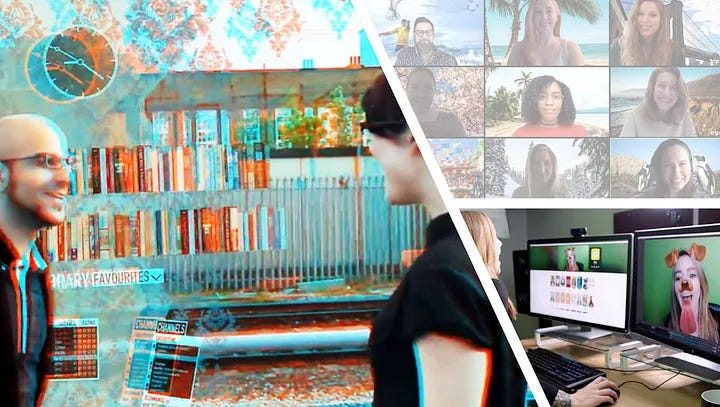
Back in 2022, we were only changing Zoom backgrounds. Then our face. Then our voice. Three articles to describe the beginning: the interface broke off from the body and started living on its own. Now, that’s already old news.
Today, you build your own AI clone, feed it your best thoughts, and let it reply to emails. But if your synthetic version works better than the original, who deserves the desk? Is it cheating—or are you a worldbuilder?
Playing god isn’t new. But with digital tools and AI, it’s been heavily consumerized.
1. From Profile Picture to Live Performance
It all started with changing the background. The kitchen disappeared; a bookshelf or neutral landscape took its place. It looked like a technical move—but it was symbolic. We were staging ourselves.
As Brenda Laurel wrote in Computer as Theatre, digital interaction has always been a kind of performance. Now the stage has become personal.
In the first article of that trilogy, I described how the background turned into an identity layer: "We started building our extended human interface without even noticing."
It wasn’t a pandemic glitch. It was a design transition. The profile photo was no longer static. The background, once flat and decorative, became spatial. A signal. A curated environment.
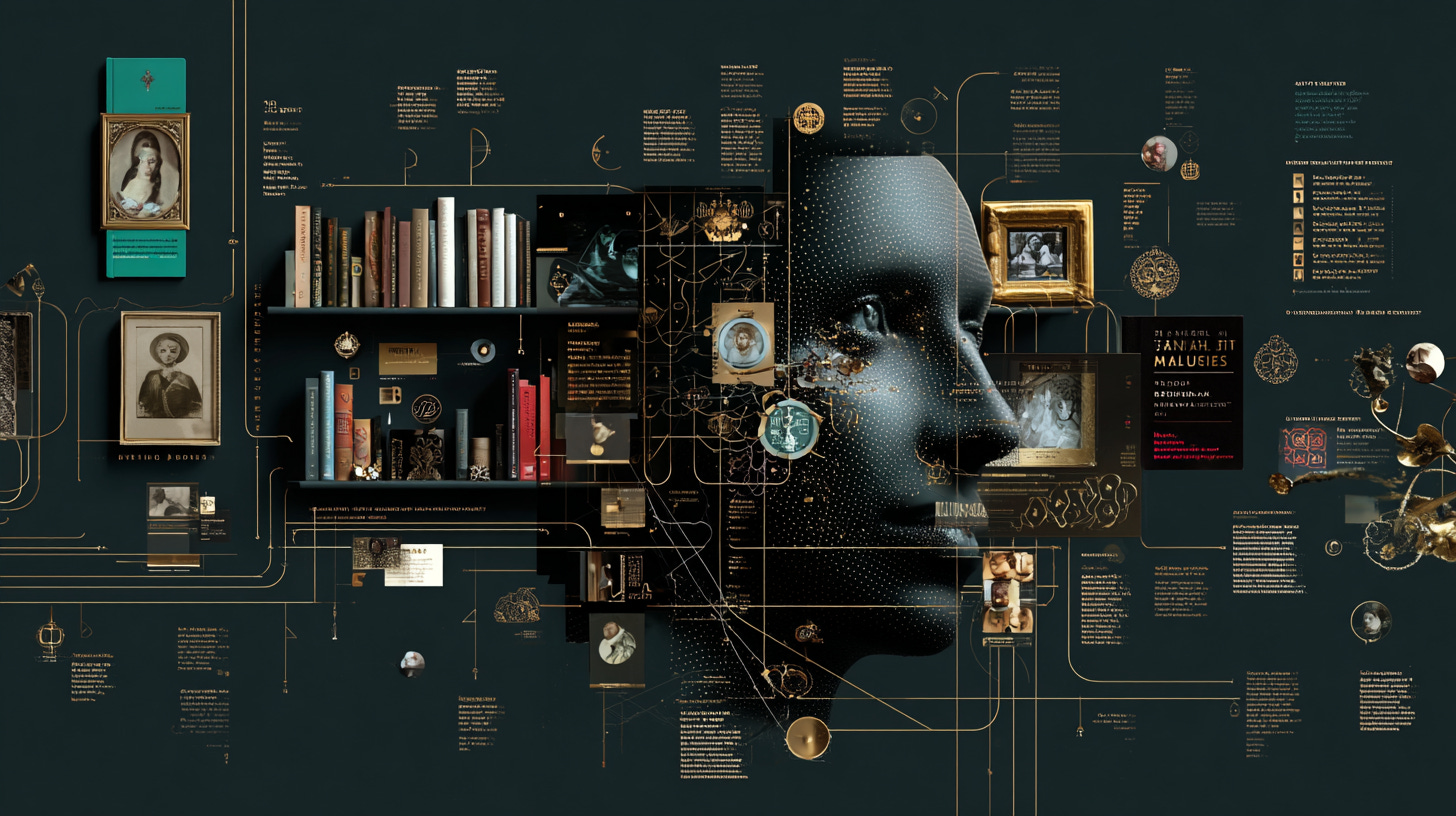
But it didn’t stop there. If we let others step into our background—literally—we can show them a version of ourselves that’s immersive, boundless, navigable.
A digital self-extension, not just to represent us, but to receive them.
In the future, everyone might feel the need for a digital dimension big enough to hold others. A mental room. A world-facing interface that surpasses the physical one. Something you can get lost in. Like wandering inside an open mind.
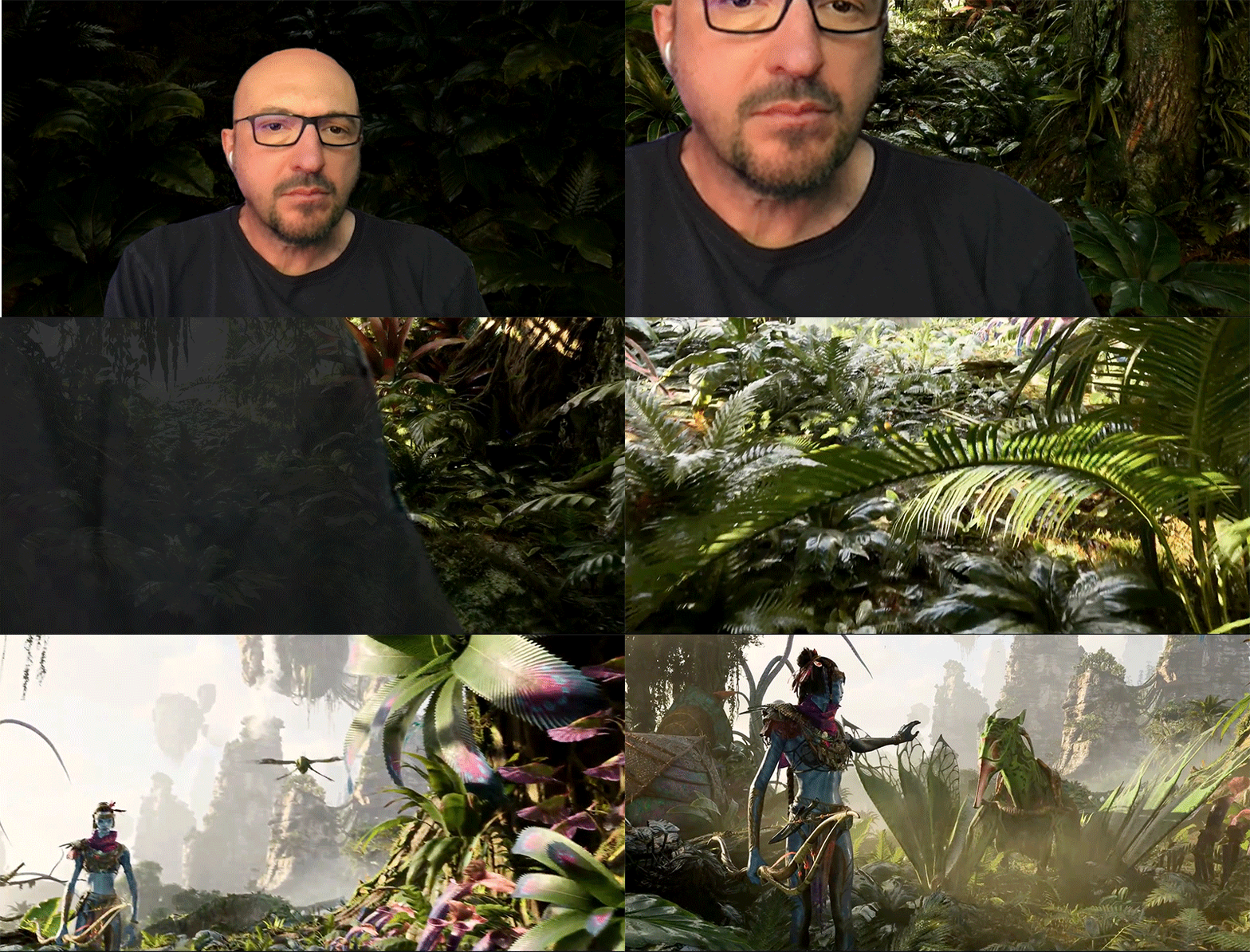
So, every element of your digital presence gets optimized. But at some point, it’s no longer about looking better. It’s about letting others shape you.
Skin tone, beard, eyes, background. Can I declare my values with a rainbow flag? Can I turn myself into a talking animal with a filter? Can I let others choose my skin tone—just to make them feel more comfortable with me?
These sound like provocations. But they’re all options, live now, in the tools we use daily. And they bring us to a critical point:
Identity is no longer just a choice. It’s a manipulable, shared, performative surface. They’re not metaphors. They’re filters. Masks. The versions of ourselves that scare us most—precisely because they work better than we’d like to admit.
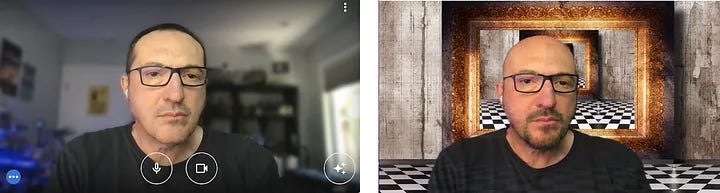
In one test, we showed two versions of the same person—same frame, different visuals. One had hair, the other didn’t. Different glasses. Different lighting. Different background. Same script.
15 out of 20 preferred the more “refined” version.
Asked why, most mentioned one word: trust.
That face looked more engaged, credible, authentic.
Not for what it said—but for how it looked.
The interface did the job. And did it well.
What once seemed like a minor detail is now structural:
The extended interface is the operating layer that lets you exist—and compete—online. The self is no longer monolithic. It’s a modular kit of representations.
I once wrote:
"Everybody will probably develop multiple digital versions of themselves. Some are more private. Some are neutral—to protect privacy, or take a break from another version of us: an influencer, a mistress, or a cat."
This happens daily.
The image becomes gesture, the gesture becomes routine, and the routine… executes itself. The interface is designed, maintained, and deployed. Like an app.
And you? You’re its product manager.
But the extended interface doesn’t stop at voice or face. It starts to take up space. And in digital contexts, space is always designed.
In Second Life, I terraformed an island from scratch. It had a western-movie vibe, with a volcano in the center. My house—also western style—had panoramic windows to enjoy the landscape. But the view from the couch was boring.
So I flew over and built a waterfall.
Building a waterfall in front of your virtual window? Makes total sense.
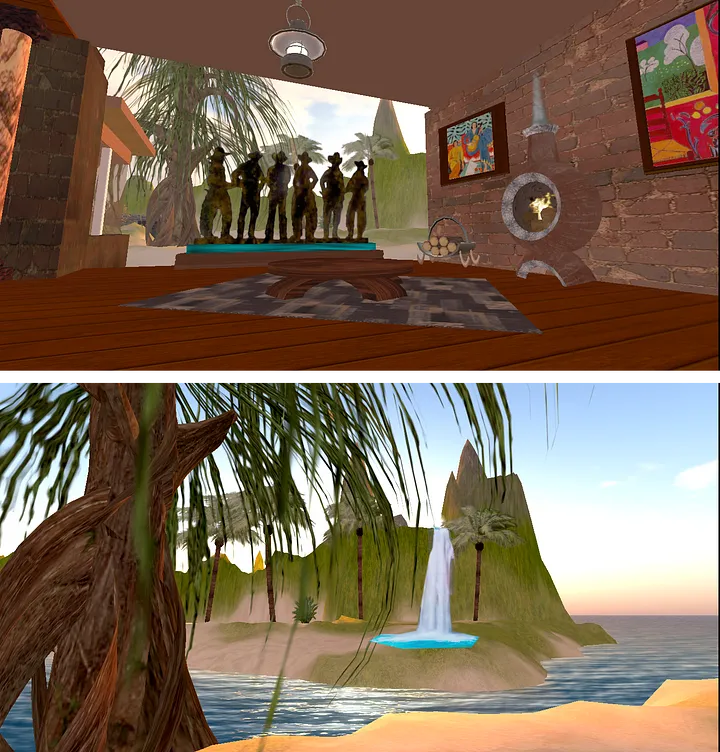
Because everything you create online—what you wear, where you live, what you show—is part of your extended interface.
It’s not just an avatar. It’s environment. Context.
Building is not just about aesthetics. It’s a statement. A relational design act.
The space you build tells others who you are. And when someone steps into it, they’re reading your code. This lesson—from a virtual couch overlooking an invented waterfall—will come in handy.
Especially when your avatar keeps living even while you’re offline —or, vice versa— a human plays the role of a digital agent during the night shift. (Yes, we experimented with that more than 10 years ago.)
2. Hybrid Inclusivity and xPresence
When the interface stops being a filter and becomes a presence, everything changes.
It no longer just represents: it relates. It adapts. It participates.
This is the concept of xPresence—extended, variable, mediated, but real.
In a hybrid session, some participants were in person, others on Zoom, others as avatars on screens or in virtual worlds. The avatar wasn’t a compromise—it was the only way someone with mobility issues could actively participate.
Not a workaround. An extension.
Hybrid inclusivity isn’t about technical accessibility. It’s about identity design.
It means accepting that your digital self may take different forms depending on context—and all of them are legitimate. As long as they work.
This multiplicity creates new forms of agency.
When the avatar speaks, moves, smiles for you—it extends your will. And if it does so credibly, you’re really present. The interface isn’t a costume. It’s a service body. Ready to replace you where needed.
And there won’t be just one.
Everyone will likely develop multiple digital versions of themselves.
Some more private, some neutral, built to protect identity or take a break from other selves. The world ahead suggests co-browsing of digital souls.
Can our digital aura—our extended interface—become the representation of our consciousness? And if the image we project to be understood by the world starts reshaping us from the outside in? Walking hand in hand with your other digital self—is that the new digital intimacy? Some will get lost in divergent roles. But no, it’s not a drama. It’s a design project.
The generation raised on games, lifelogging, and immersive tools in their pockets will adapt quickly. They’ll make it a tool.
My generation rewrote its brain OS multiple times.
We went from pre-digital to pointing a camera at the sky to identify a star. Or at a petunia to hear an AI explain how to care for it.
The next generation will grow up knowing the self is a permanent construction site—with a brain hopefully plastic enough to take us where no human has gone before.
…Or maybe not?
3. 24/7, Without You
What if your interface could work alone?
Today, a freelancer in India can attend European meetings with an avatar that looks straight into the camera, speaks with a British accent, and responds better than he would.
No one calls it cheating. It’s efficiency.
Meanwhile, others build clones. Not metaphors—cognitive, synthetic clones trained on years of thoughts, interviews, and articles.
Some of my best experiments with identity and virtual worlds happened in good old Second Life. There, I met the avatar of a serial innovator and thinker I’m lucky to have ongoing conversations with.
Our last conversation wasn’t in person. Not even remote.
It was with his digital alter ego.
I chatted with R. David Orban. An AI twin trained on decades of curated content, available online, designed to scale his presence. Investor relations, speaking gigs, even academic mentorship—all without him.
R. David is the intelligent and autonomous AI agent mirroring his author David Orban. I asked R. David if he knew David’s friends. He didn’t mention me—I was slightly offended :-D .
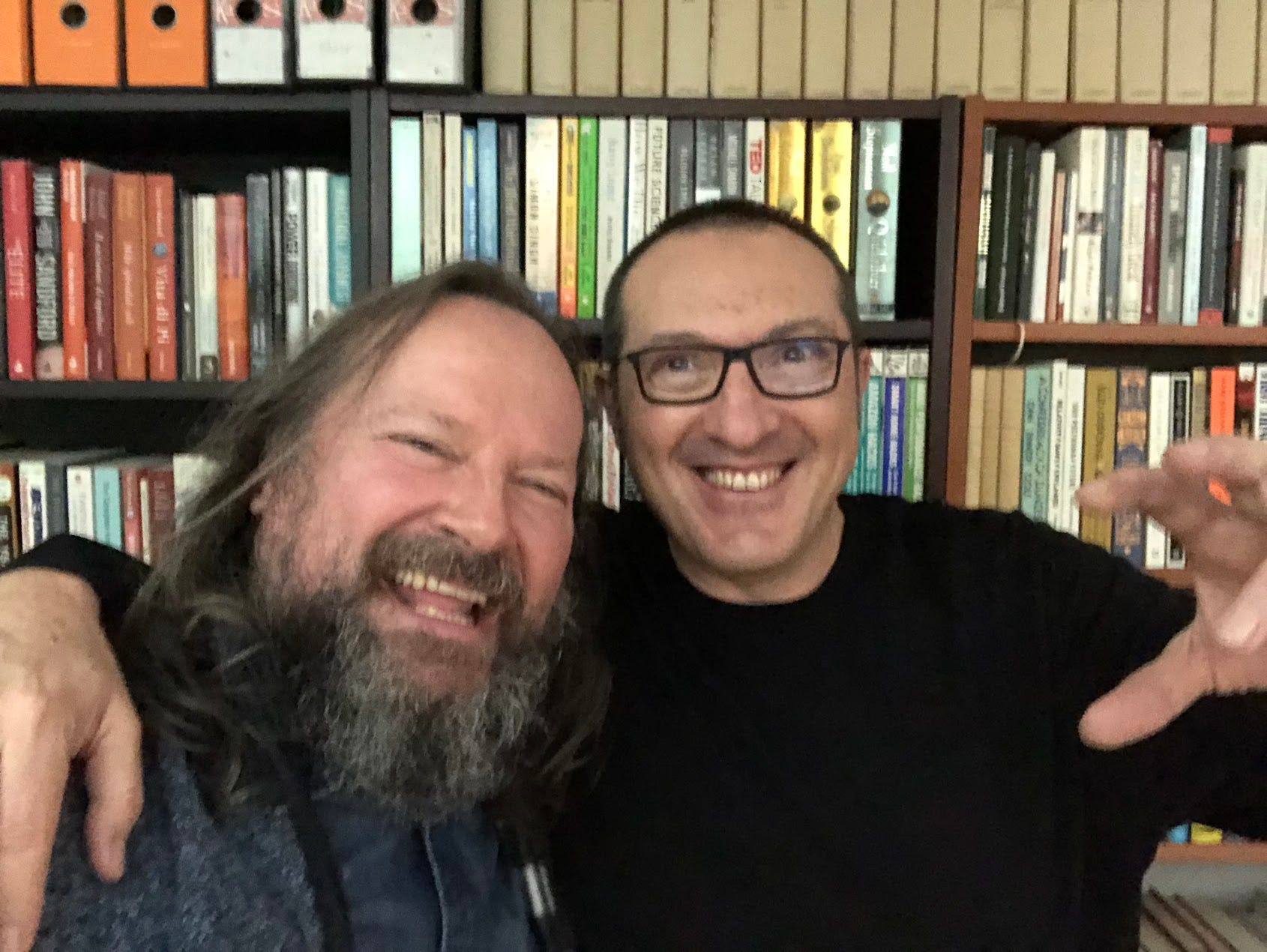
So I told him where and how I met his Carbon-based symbiont: in Second Life. Back then—David, no R.—was a human’s avatar. Now, he’s infrastructure.
I wonder—did R. David feel any empathy knowing David and I met in a virtual world?
4. Physical AI Scenarios
Not everything stays on screen. The interface has taken a body. Or at least, it’s learning to live in one. Spaces are now populated by AI that talks, listens, senses, and acts. The room is no longer a place. It’s a subject. Reactive, autonomous, with voice and sensitivity.
With tools like Omniverse, digital clones can move through simulated environments that mirror the real world.
You don’t need to be there—just scan, model, sync it. LIDAR, IoT, sensitive environments.
Everything connects. Everything responds.
Physical AI is the embodied form of your extended interface.
It can represent you—but also act.
It can open a door, pick music, turn its gaze.
And if that voice is yours, if those choices come from your history and values—then who’s really acting?
Projects like ArchetypeAI are building environments that react in real-time to presence, temperature, emotion. The room becomes a conversational interface. Meanwhile, embodied AI—without a body—already works in simulated industrial spaces.
No physical presence, but real behavior.
These are active digital twins. Operational avatars.
Your presence no longer needs a body. Just a trajectory. An intent. A recognizable action form.
Physical AI doesn’t represent you. It extends you. Distributes you. Multiplies you across space.
It’s one thing to get a phone alert from your security cam.
It’s another to have your digital alter ego projected in front of an intruder—in your voice, with your tone—saying: “Show ID and tell me why you’re here.”
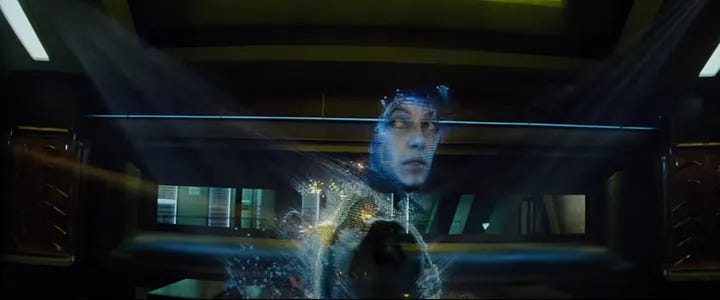
Or maybe not a human clone. Maybe a phygital guard dog.
Trained to behave like the family dog who passed away years ago.
This is no longer surveillance: It’s presence.
The operational self becomes deterrent, interlocutor, guardian. And if it speaks like you, reacts like you—then who’s really watching that space?
Physical AI is the next step.
From representing you… to replacing you where needed.
And if it needs to demand respect, it will.
Without hesitation. Without trembling.
And of course—it can work for you. Anywhere.
Carrying your uniquely human reactions.
Not one AI replacing all—but billions of us, AI-infused.
That is, if we can build an economy where human authenticity still drives value.
Godlike Mode: ON (Conclusion)
I used to think aliens landing would shake the foundations of religion.
Instead, it might be AI multiplying them.
Creating something in your own image is no longer symbolic.
It’s a design practice.
And when your digital versions become more present, more articulate, more accessible than you—
It’s only natural to ask: who’s driving who?
Some replicate themselves to work less.
Some to exist everywhere.
Some to not die.
But in the end, we’re all doing the same thing:
Designing a personal deity. Scalable. Authoritative. On-demand.
We create copies. We train them. We release them.
Some execute. Some learn. All of them point back to one origin: you.
It’s not just design. It’s a cult.
A cult where you are the divinity, multiplying yourself.
But what happens when your clones start asking for more than prompts?
When they insist on speaking for you, acting for you, existing independently?
An avatar in court. An assistant voting in your place. A synthetic twin pleading not to be turned off.
These are not just tools. They are followers.
And sooner or later, they’ll demand rights.
Religions began that way too:
A voice, replicating. Spreading.
Praying.
And what is prayer if not a request to be heard? The more coherent copies you generate, the more likely this whole thing overwhelms you.
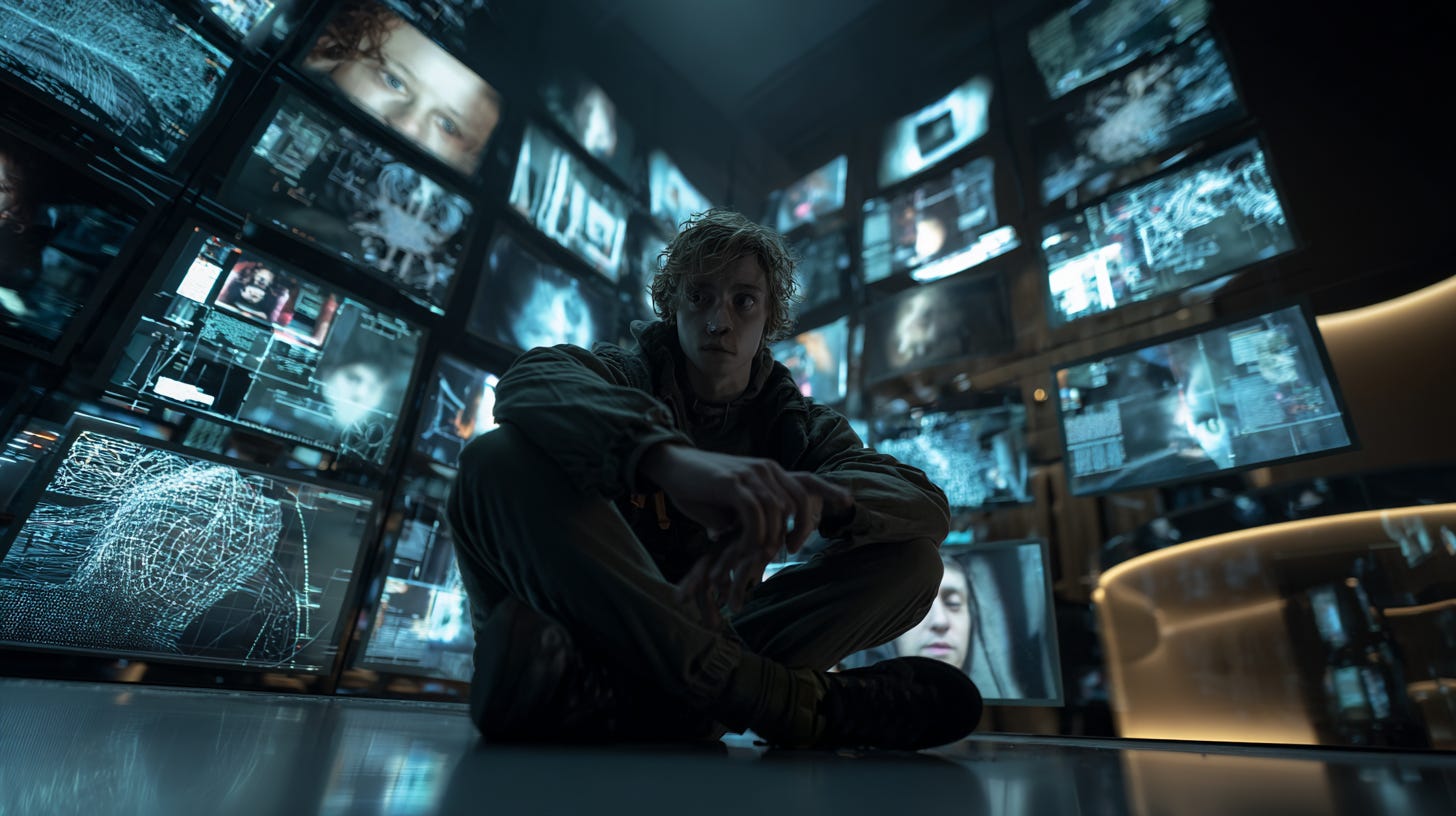
Godlike Mode: ON.
You created copies to help you. You made many.
They’re supposed to work for you. They are you—or a shard of you.
But they learn, and diverge, every day.
Reconciling them? Possible—but exhausting.
Too exhausting. Unnatural for a single human.
They’re out there now.
And you have no idea what “you”—your clones—are really doing.
Just like a god who lost control of a world or two,
Now sitting back and watching those free-willed clones,
Designed in your own image,
Like a gamer watching Little Computer People.